Become Her Again

A letter for every woman who's been told she's "fine"

It's Not Stress. It's Not Your Age.
And It Is Not In Your Head.

The thing that's been quietly stealing your energy, your patience, your joy — and the woman you used to be — has a name. I found it at 33, after every doctor told me my labs were "normal." Twelve minutes from now, you'll know it too. And once you do, you will never un-see it again.

Read Melanie's StoryIt starts exactly where you are
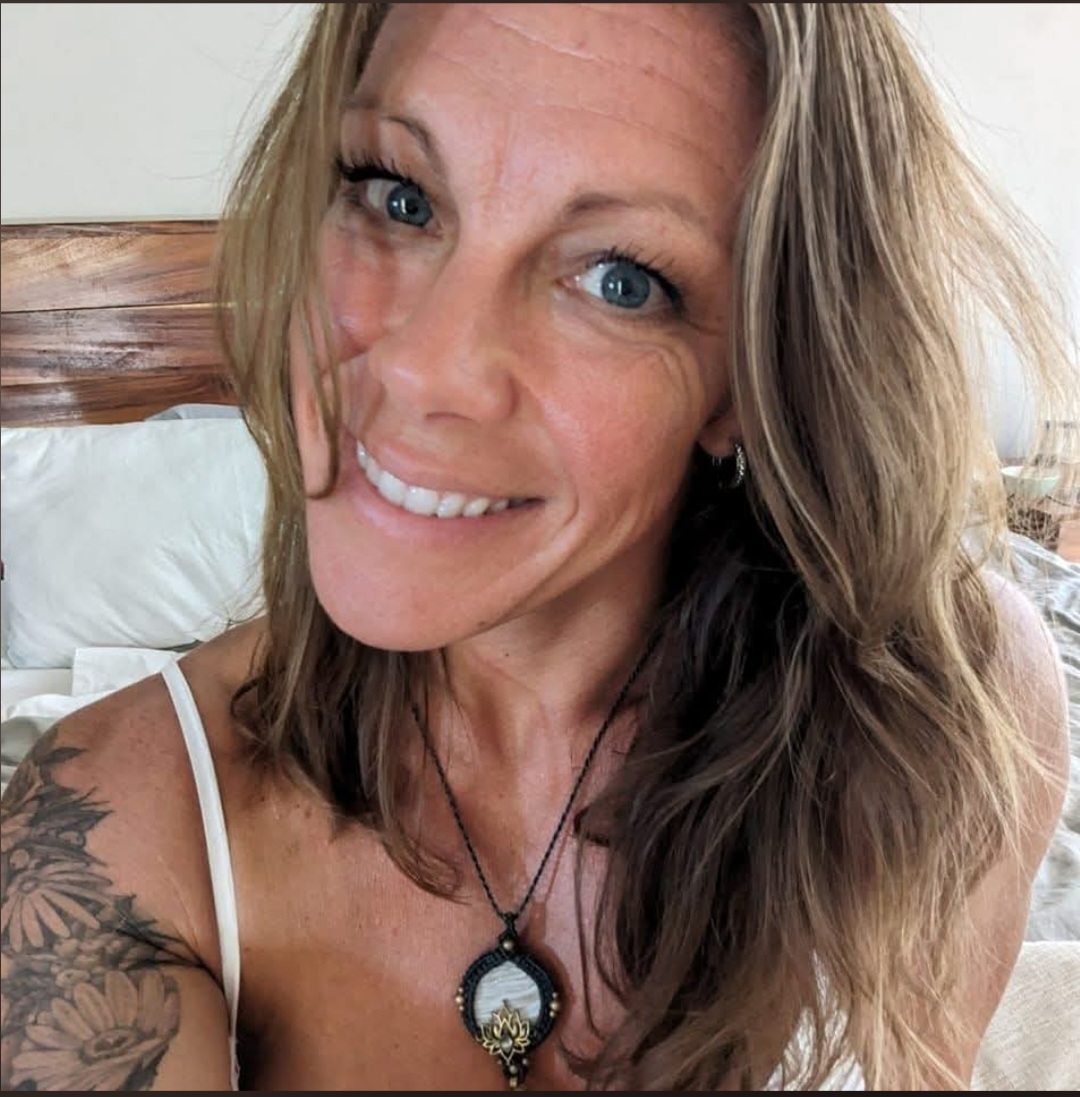
Melanie today — warm, rested and herself again

Educational & judgment-freeWritten by a woman who lived it60-day keep-everything guarantee

In the next twelve minutes, three things are going to happen.

One: the thing that's been taking you gets a name. Not "stress." Not "aging." Not the shrug you got at your last appointment. The real thing. And naming it changes everything, because you cannot fight fog — but you can fight a thing with a name.

Two: you're going to find out why every explanation you've been handed so far missed. Not slightly missed. Aimed at the wrong target entirely — which is why nothing you've tried has worked, and why that was never your fault.

Three: I'm going to hand you the road back. Not in theory. I walked it — out of a decade I lost — and I wrote down every step, every dead end, and every shortcut, so the road that took me years takes you an evening to read.

Read every sentence. The one you skip will be the one you needed.

Part OneLet me guess a few things about you

Not because I'm psychic. Because I was you.

You wake up tired. Not "long day" tired — tired like the night gave you nothing back. You lie there at 3 a.m., wide awake for no reason you can name, doing the math on how many hours are left, and by morning you're exhausted before your feet touch the floor.

The smallest things light a fuse you didn't used to have. A dish in the sink. A question asked while you're mid-thought. The sound of chewing. And afterward — after you've snapped at people you love over nothing — you sit in the bathroom or the car and think: who was that? That's not me.

Words vanish mid-sentence. You walk into rooms and forget why you're there. You write things down now, because somewhere along the way you quietly stopped trusting your own mind.

You've typed "why don't I feel like myself" into a search bar at 2 a.m. — and deleted it. Because how do you explain something that has no name?

And somewhere in the last year or two, the color drained out of things. The hobbies. The plans. The laughing at dumb things with your husband. You're not sad, exactly. You're... blank. Going through the motions of a life that used to be yours, played by someone wearing your face.

Maybe you've even done the darkest math of all, the one you'd never say out loud: maybe this is just who I am now. Maybe the other version of me is gone.

If you've whispered any version of "I don't know who I am anymore" — to a friend, to a search bar, or to nobody at all —

this letter was written for you. And the first thing it's here to tell you is the sentence I needed someone to say to me on that bathroom floor:

There is nothing wrong with who you are. Something is wrong with what your body is running on. Those are two completely different problems — and only one of them is fixable by trying harder. It's not that one.

Name ItThe thing that's been taking you has a name

For years I couldn't fight what was happening to me for one simple reason: it didn't have a name. "Stress" wasn't it. "Getting older" wasn't it. "Depression" was only its shadow. You can't fight fog. So it kept winning.

Then I finally understood what I was dealing with — and I gave it the name it deserved. I call it The Fade.

The Fade is what's been dimming you. And it stays undefeated in most women's lives because it plays four tricks that are almost perfect:

The Fade's four tricks

  • It comes slowly, so you adapt. No crash, no headline moment — a dimmer turning one degree a month. You adjust to each small loss the way eyes adjust to a darkening room, until you can't remember what bright felt like.
  • It steals in a scattered order, so it never looks like one thing. Color first. Then sleep. Then patience. Then warmth. Then wanting. Each theft gets its own innocent explanation — so nobody, including you, ever adds them up. That's not an accident. That's the design.
  • It speaks in your voice. "I'm just tired." "I'm fine." "This is probably just who I am now." The Fade's greatest trick is getting you to defend it — to explain it away on its behalf, for years. Every time you've talked yourself out of looking deeper, that was it, talking.
  • It hides behind one word: "normal." When you finally go hunting for it, it slips behind a lab printout and a wide statistical range — and walks you right back out the door with its favorite sentence: "everything looks fine."

Here's what changes everything: once you can name The Fade, you can hunt it. Because under the costume, The Fade isn't mysterious, and it isn't your personality dying. It's chemistry — specific, explainable, addressable chemistry. I'm going to pull its mask off a little further down this page.

But first I need to show you something more important than the enemy. I need to show you what morning looks like after it's gone.

The Other HalfNow let me show you a different morning

Everything you just read — the 3 a.m. ceilings, the fuse, the blankness — that's The Fade's work. And it was only ever half of my story. The first half. Here's the half nobody warned me was still possible:

These days I wake up before the alarm — actually rested, actually ready. I train hard and my body answers like it did fifteen years ago; there is muscle on this 44-year-old frame that wasn't there at 34. My moods are mine again — steady, warm, predictable — and my kids get the mother who laughs, not the one hiding in her bedroom. My mind is sharp. My interests came back like lights coming on in a house, room by room.

And my marriage? The warmth I'd quietly written off as "just what happens after enough years" is back — and I reach for my husband because I want to, not because I feel guilty.

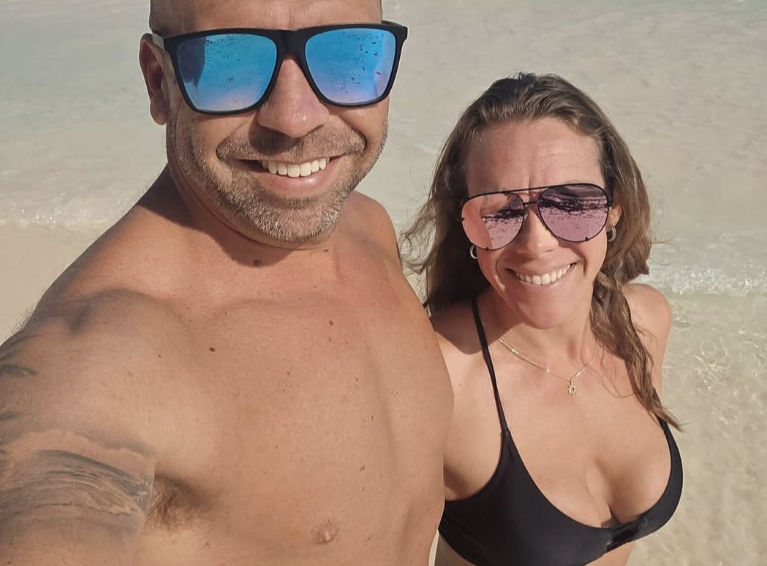
Melanie and Roger together, laughing
Roger and me — Puerto Aventuras

Same woman. Same husband. Same house. The woman who once sat on her bathroom floor wondering where she went — and the woman writing this to you now — are the same person, separated by exactly one thing.

Not willpower. Not discipline. Not luck. Information. Information that has existed the entire time, that nobody handed either of us — and that I'm going to start handing you right now, on this page, for free, before I ask you for anything.

So hold both mornings in your mind — the one you woke up to today, and mine. The distance between them is the subject of this letter.

You are not crazy. You are not weak. You are not a bad wife, a bad mother, or a failed version of the woman you used to be.

Your body changed the rules on you — and nobody told you the rules had changed.

You didn't lose discipline. You didn't stop trying. Your personality did not rot.

What's happening to you has a cause. The cause has a name. And the maddening part — the part that still makes me angry — is that the explanation has existed the whole time. It just wasn't handed to you. You got handed other things instead: "it's stress." "It's normal at your age." "Your labs look fine." Maybe a prescription that treated the shadow instead of the thing casting it.

I got handed all of those too. Here's what happened to me.

Part TwoI was 33 when I started to fade

I'm 44 now. But this started when I was 33.

Thirty-three. Write that number down — later on this page it's going to matter more than you think.

It didn't happen overnight. That's the cruelty of it — The Fade is a dimmer, not a switch. It took my energy first. Then my sleep turned to static. Then my moods started swinging in ways that scared me — fine to furious to crying, with no story I could tell about why. A darkness moved in that I now know was depression, though at the time I just thought I was failing at being a person.

And desire? Gone. Not reduced. Gone. I want to be honest about what that does to a marriage, because nobody talks about it: Roger and I love each other fiercely — 28 years married — and that season nearly hollowed us out anyway. He thought it was him. I thought it was me. We were both wrong, and neither of us knew it, so we just quietly ached at each other from opposite sides of the same bed.

I did what you're probably doing right now. I tried harder. I exercised. I ate cleaner. I read the books. I told myself every woman gets tired.

I was 33 years old, and I was fading out of my own life while doing everything right.

The Turning PointThe sentence that changed everything

The turning point wasn't a doctor's office. It was a resort pool in Mexico.

A couple laughing together by a resort pool in Mexico
The couple at the pool who completely changed our lives...

Roger and I met a couple there — older than us, and I mean visibly older — who were, frankly, embarrassing us. Strong, lean, lit up from the inside, laughing like teenagers. The kind of energy I dimly remembered having and assumed was gone for good.

So we asked. Half joking. What's your secret?

They didn't laugh. The woman looked at us — really looked — and said:

Go check your hormones. If you've never properly checked them, I can almost guarantee your chemistry is working against you. And no amount of willpower beats chemistry.

I remember being almost offended. Hormones? That was a word for menopause — for women my mother's age. I was 33.

That sentence sent us down a road that took years to walk. I'm going to save you those years right now.

Part ThreeThe Three Signals

This is where I pull the mask off The Fade. Because it has a real face — and nobody had ever explained it to me. Not in school. Not in a checkup. Not in years of wellness content.

Your sense of being you — your energy, your steadiness, your sharpness, your joy, your warmth toward the people you love — is not a personality trait. It runs on chemistry. Specifically, it runs on three chemical signals your body has been broadcasting since your teens: estradiol, progesterone, and testosterone. Yes — testosterone. Women run on it too, and it governs more of your drive, confidence and vitality than almost anyone tells you.

I call them The Three Signals — and falling signals are what The Fade actually is. Here's the part that explains why your experience has been so confusing:

They don't fade together, and they don't fade politely

  • Starting as early as the first half of your thirties — years, sometimes a decade-plus before anything anyone would call "menopause" — the signals begin to drop at different rates, in different orders, on different timelines for every woman. One can crash while another swings wildly.
  • Which is why one woman gets the rage, another gets the 3 a.m. wake-ups, another goes flat and numb, another gets all of it in rotation — and none of you match the checklist in the pamphlet. You were never supposed to. The pamphlet was written for a pattern; The Fade doesn't do patterns.
  • It masquerades as depression, as anxiety, as burnout, as "maybe I don't love him anymore" — because falling signals produce real emotional states. Read this twice: The feelings are real. The story you've been told about what they mean is not. You haven't been failing. You've been running a marathon on a fraction of the fuel — and calling yourself lazy every time you slowed down.
And underline this one: "your labs are normal" does not mean your signals are fine. That sentence is The Fade's favorite hiding place. Standard ranges are so wide they'd call a 25-year-old and a 55-year-old both "normal." The question was never are you inside a giant statistical range — it's where are you compared to the you of ten years ago? Nobody measured you then. So when the numbers came back "fine" and you left that appointment feeling insane — you weren't insane. The measuring stick was.

Normal is not the goal. It never was.

Ask yourself where a "normal range" actually comes from. It's built from the population that gets tested — the average adult. Now picture the average adult today, honestly: exhausted, carrying extra weight, running on caffeine, sleeping badly, no drive, no spark. That's the crowd the ruler was carved from.

So when your results come back "normal," understand what you've actually been told: congratulations — you're as depleted as everyone else.

I didn't fight my way back for a decade so I could be normal. Normal was the problem. What I wanted — what you want — is optimal: the energy that gets you out of bed before the alarm, the steadiness, the strength, the drive, the joy your body is actually capable of producing. Two completely different targets — and almost the entire system is aimed at the first one.

Not because doctors are villains. They're not, and you'll never hear me tell you to distrust medicine. It's that most were barely trained on any of this — hormone education is a known, documented gap in medical training. So they reach for the tools they were trained on — often an antidepressant — and they define success as "inside the range." Kind people. Wrong target.

Once I understood the Three Signals, my entire lost decade reorganized itself in front of me. The exhaustion, the static sleep, the swings, the numbness toward a man I love — it was never a character flaw. It was signal loss. And signal loss is not a life sentence. When it's addressed properly — in the right order, guided by how you actually feel — many women stop just "managing symptoms." They find their way back.

I know, because I came back. But first I hit the wall that's waiting for you too.

What it looks like when all three are balanced

Everything above is what falling signals feel like. This is the other side — what women describe once the three are steady again, in the right order, adjusted by how they actually feel. Read these as the destination, not the promise: every woman's road runs at her own pace.

★★★★★

"I was the woman who used to run on five hours of sleep and still function. Suddenly I was exhausted by 2 p.m. and wide awake at 3 a.m. for no reason. Doctors kept saying it was normal aging. The Body Map chapter showed me the timeline. I finally stopped gaslighting myself. Six weeks after I started working with a better provider, the 3 a.m. wake-ups mostly stopped. That one change made the rest of the day possible again."

Lauren, 45 · sleeping through again

★★★★★

"Desire had been gone for almost two years. Not low — gone. I loved my husband and felt guilty every time he reached for me. I assumed it was just what happened after enough years and kids. Understanding that one of the signals governs that part of you was the first time I felt hope instead of resignation. I'm not back to 30. But I'm back to wanting him again, and that feels huge."

Sarah, 48 · the wanting came back

★★★★★

"The brain fog was the worst. I'd lose words mid-sentence in meetings and pretend it was funny. Inside I was terrified I was getting early dementia. The book didn't fix my brain overnight, but it gave me a framework so I stopped panicking and started tracking. When I finally found a provider who listened, we adjusted based on how I actually felt instead of the printout. The fog lifted enough that I trust myself at work again."

Priya, 49 · clear-headed at work again

★★★★★

"I had already tried hormones once and it didn't go well. The dose was wrong and I felt worse, so I quit and decided the whole thing was overhyped. The section on 'numbers-first is backwards' explained exactly what happened to me. This time I used the Appointment Scripts and the Checklist. Different provider, different approach, completely different result. I wish I'd had this the first time."

Dana, 52 · second try, right approach

★★★★★

"I almost didn't buy it. I'd already spent close to four thousand dollars on appointments, supplements and one specialist who talked at me for eleven minutes. Another purchase felt naive. But this cost less than the parking at that clinic, and it's the only thing that actually told me what was happening in my body. If it had cost ten times more I'd still tell you it was the cheapest part of the whole ordeal."

Karen, 50 · the cheapest thing she tried

★★★★★

"I read it in one evening. By the next morning I'd highlighted the three things I'd been describing wrong for years, and I rebooked the appointment I'd cancelled out of frustration. That appointment went differently than every one before it — because for the first time I knew what to ask. You don't have to wait months to feel a difference. The shift in how you see it starts the same night."

Nicole, 42 · read it in one evening

Balanced isn't "symptoms managed." It's waking up, sleeping through, wanting things again — and being able to read your own body when it changes.

Part FourThe wall of "your levels are in range now"

I wish I could tell you the couple's sentence fixed everything. It didn't — it aimed us in the right direction. The road itself was long, and I'm telling you about the potholes because they are the exact potholes waiting for you.

We found a doctor in Playa del Carmen who specialized in hormones. His protocols helped — for the first time in years I saw light — but they only took me part of the way. So we tried another practitioner. Then another. And with every one, I ran into the same wall:

They kept steering everything back to the numbers. I'd sit there describing my actual life — the exhaustion, the flatness, the person I wasn't anymore — and they'd look at a printout and tell me my levels were "in range now." As if the printout were the patient. I'd leave with paperwork saying I was fixed and a body insisting I wasn't. I watched The Fade hide behind that printout for two more years.

Here's what those wasted months taught me: numbers-first is backwards. The printout is a tool. You are the instrument. The rare providers who actually help women find their way back work in exactly the opposite direction — they start from how you feel, adjust by how you feel, and use the labs to inform the journey, not to end the conversation. Finding one of those — instead of burning a year and thousands of dollars cycling through the other kind — turned out to be half the entire battle.

So Roger and I did what apparently nobody was going to do for us: over 400 hours of research, working carefully through the options for all three signals, one variable at a time, judged by the only measure that ever mattered — how I actually felt — until we found what worked for my body.

And then I got my life back. Not a coping-better version. Back. The energy. The sleep. The steadiness. The gym results I'd stopped believing my body could produce. The laughing. And yes — the wanting. The part of my marriage I'd quietly written off as "just what happens after enough years" came back like it had never left — and I finally understood it had never been about the years at all.

And here's the part I never expected — the part beyond "back": fluency. Today, at 44, I read my own body the way you'd read a dashboard. When something shifts — energy, mood, warmth — I usually know which signal moved. When something needs adjusting, I walk into my provider's office with a hypothesis instead of a mystery, and we adjust together, by how I feel.

That's the destination this whole road leads to. Not "symptoms managed." A woman who understands her own control panel — who is never again at the mercy of a body she can't read or a printout she can't argue with. The Fade doesn't survive in a woman who can see it.

Part FiveThen our village found out

We're Canadians, originally — we've lived and traveled through Mexico for the last five years, and home now is Puerto Aventuras, a village of about five thousand people on the Caribbean coast. In a place that small, you can't hide a transformation.

Melanie and Roger on the Caribbean coast
Home: Puerto Aventuras, on the Caribbean coast

Women noticed. The energy, the strength, the mood, the way Roger and I were with each other. And one by one, they started asking the same question we'd asked at that pool: what's your secret?

So we told them. We sat at kitchen tables and explained the Three Signals. We showed them what to ask for, what to watch for, and — most of all — how to find the right kind of provider on the first try instead of the fourth, so none of them had to waste the years and money we did. And we watched woman after woman walk the same road home that I walked.

★★★★★

"I used to sit in the car after school drop-off and just stare. Not crying, not thinking — just blank. I'd been told it was stress and that my labs were fine for three years. The Symptom Decoder was the first time anyone showed me the pattern instead of handing me another shrug. I walked into my next appointment with actual questions instead of hoping they'd figure it out. That alone changed everything. I'm not 'fixed.' I'm just not lost anymore."

Elena, 44 · Puerto Aventuras

★★★★★

"The rage was the part that scared me. I'd snap at my kids over nothing and then hate myself for an hour. My husband started walking on eggshells. I thought I was becoming a terrible mother. Reading the section on the Three Signals made the whole mess make sense for the first time. I still have hard days, but I don't feel like a stranger in my own skin every single morning."

Rachel, 47 · Puerto Aventuras

★★★★★

"I had typed 'why don't I feel like myself anymore' into Google so many times I was embarrassed. Every article either said 'self-care' or 'antidepressants.' The book was the first thing that didn't insult my intelligence. The Provider Kit scripts are what I actually used — word for word — when the doctor started the 'labs look normal' speech. I left with a real plan instead of another prescription I didn't want."

Michelle, 51 · Puerto Aventuras

★★★★★

"My daughter told me, 'Mom, you're mean now.' That broke me. I wasn't mean on purpose — I just had zero buffer left. The chapter on how the signals affect mood and patience was the first time anyone connected the dots without making it sound like a character flaw. I'm still working on it, but the version of me that used to laugh with her is coming back. She noticed before I did."

Christine, 46 · Puerto Aventuras

★★★★★

"I spent four years being told I was 'too young' and that my labs were fine. By the time I found this, I was convinced the real me was just gone. The measuring-stick section — the part about how 'normal' ranges are built — made me angry in the best way. I finally understood why every appointment ended the same. That understanding is what got me to keep looking instead of giving up."

Marisol, 43 · Puerto Aventuras

★★★★★

"I'm 54 and I honestly thought the best years were behind me. Not in a dramatic way — just quietly accepting that energy, patience, and wanting things were over. The book didn't promise me a miracle. It gave me a map and the language to use with a provider. Six months later I'm stronger in the gym than I was at 40, I sleep through most nights, and I don't feel like a visitor in my own life. That's more than I expected."

Renée, 54 · Puerto Aventuras

The phrase we kept hearing — the one that eventually named everything we do — was some version of: "I feel like myself again."

That's when we decided to stop explaining it one kitchen table at a time.

Before I show you what's inside — this isn't for everyone

Let me save some of you three minutes.

Don't get this if you're looking for a magic pill — the Protocol is education and a plan, and it asks you to actually use both. Don't get it if you'd rather keep hearing "it's just stress" — that explanation is free and available everywhere. And don't get it if you're unwilling to even consider that your chemistry might be involved — no book can help a mind that's already closed.

But if you're the woman who read this far because something in her refuses to accept disappearing — the one who's been collecting 2 a.m. search results and unsatisfying appointments and thinking there has to be an actual answer — then I built every page of this for you.

And you already know it.

Show Me the ProtocolThe complete map, in the right order
The Protocol

Everything I know,
in the order you need it

The decade. The 400+ hours of research. The dead ends I already hit for you. Every kitchen-table conversation. Built into one complete, self-paced system: The Become Her Again Protocol — the map from "I don't recognize myself" to "I'm me again" — without the wasted years. Everything The Fade used against me, turned into the plan that evicts it.

Here's everything inside — not as a pile of information, but as what each piece actually does for you, starting the night you open it.

Here's what you'll know by tonight — and what you'll be able to do by next week

  • Name what's been taking you — The Fade, explained so clearly you could teach it to a friend in two minutes. "Maybe it's just me" ends in chapter one.
  • Read the Three Signals — which governs your steadiness, which your sleep, which your drive — so when something shifts, you know which signal moved instead of wondering what's wrong with you.
  • Know which signal falls first — and why its disguise fools nearly everyone, including doctors. (Chapter 3. Most women say this page reorganizes their last five years.)
  • Understand why "normal labs" and "I feel awful" were both true — where ranges come from, why the measuring stick was wrong for you, and what to measure against instead.
  • Hold your patterns on paper — the Decoder turns "I just feel awful" into a written picture in your handwriting. The 2 a.m. searching stops; the question finally has a shape.
  • See your road ahead, marked — decade by decade, so nothing about your body ambushes you again.
  • Know what to do first, second, third — starting tonight, before a single appointment. No pile of information without a starting line.
  • Know which over-the-counter basics have real support behind them — and which are just marketing — the short list I actually use, what each one is for, and the expensive bottles I'd never buy again. (It's in the Plan. Your bathroom cabinet will thank you.)
  • Find the right provider on the first try — the five-question test that reveals in one appointment whether they work from how you feel or only from printouts. (Kit, page 6 — worth two years and thousands of dollars to me.)
  • Walk in as the most prepared person in the room — the exact evaluation to request, word-for-word scripts for "it's probably stress," and the one-page checklist that makes you impossible to wave off.
  • Read your own body like a dashboard — for life — a hypothesis instead of a mystery, at every appointment, forever. The Fade doesn't survive in a woman who can see it.

And where does that road actually lead?

You already read where it led me. Let me put it side by side, because this is the real product — not pages, the other morning:

Mornings I wake up before the alarm — rested, actually ready.

Nights I sleep through — the 3 a.m. ceiling is a memory, not a routine.

A fuse that's gone. My moods are mine again — steady, warm, predictable. My kids get the mother who laughs.

A body that answers at the gym like it did fifteen years ago — there is muscle on this 44-year-old frame that wasn't there at 34.

And the wanting. The part of my marriage I'd written off as "just what happens after enough years" — back like it never left. I reach for my husband because I want to.

That's my list. The women from our village describe their own versions — the mornings back, the sleeping through, the drive and the confidence, the "you're nice again" from a daughter, the "there you are" in a hallway. Read all of it as the destination, not a promise — every woman's road runs at her own pace, and anyone who sells you dates is lying. What I'm selling is the map I walked and everything I learned on it. The mornings are what the map is for.

So what is Become Her Again, exactly?

It's the whole map, in one place — written by a woman who was lost on it. Not a supplement. Not a diet. Not another list of symptoms you already know you have. It's the education no one sat you down and gave you, followed by a plan you can start tonight, followed by the exact words to say in a doctor's office so you don't get waved off again.

It's built in three parts, and they go in this order on purpose:

1. You finally understand what's happening. The Three Signals — what each one governs, which one usually falls first, and why its disguise fools almost everyone. This is where "maybe it's just me" ends.

2. You get a plan for tonight. The 4-week Come Back to Yourself sequence — first, second, third — including everything you can begin before a single appointment. No waiting rooms required to start.

3. You stop getting dismissed. The Provider Kit, the scripts, and the one-page checklist you carry into the room — so you leave with answers or a documented reason why not.

Everything is instant — downloads and video you can open in the next two minutes, on your phone, privately. Nothing arrives in the mail with a label. Nothing renews. You pay once. And you have 60 days to decide it was worth it; if it wasn't, you write one email and get every dollar back.

Every piece of that lives in one of the three editions below. Pick yours:

🔒 Private, discreet billing · instant access on any device · yours forever

The 60-Day "Feel It or Keep It" Guarantee

Read the book. Use the Decoder. Take the Kit to an appointment. If sixty days from now you don't feel you finally understand your own body — and hold a clear plan for getting yourself back — one email, full refund, keep everything. All the risk is mine. It should be. I'm the one who knows what's in the box.

Picture the next sixty days

Tonight: you open the book, and somewhere in chapter one you stop and read a paragraph twice — because it's describing your Tuesday, and for the first time in years someone is explaining it instead of dismissing it. That feeling has a name: it's what being understood feels like. Most women tell us it starts there.

This week: the Symptom Decoder turns your fog of "I just feel awful" into a written picture you can hold — which signals, which patterns, in your handwriting. The 2 a.m. searching stops, because the question finally has a shape.

The appointment: you walk in with the Provider Kit — the right evaluation to request, the scripts, the red flags — and for the first time, you're the most prepared person in the room. Whatever happens next, you are never again the woman who gets patted out the door with "your labs are fine."

I can't promise your body's timeline — every woman's road runs at its own pace, and anyone who promises you dates is selling something dishonest. Here's what I can promise, on the guarantee above: sixty days from now you will understand your own body better than you ever have — or you'll pay nothing and keep every word.

Your QuestionsThe thoughts you're having right now

"I'm too young for this."

I was 33. The signals start shifting up to a decade-plus before anything a pamphlet would call menopause. "Too young" is how women lose their thirties and forties to something addressable.

"My doctor said my labs are normal."

So were mine. Re-read the measuring-stick section. Normal-for-a-population is not normal-for-you — and the Provider Kit exists precisely for this conversation.

"I was offered antidepressants."

Of course you were — not because your doctor is careless, but because that's the tool the training covered, and the root cause wasn't. Sometimes they're genuinely needed, and nothing in this Protocol says otherwise — this is education, not medical advice, and it never asks you to stop or start any medication. But if the root is signal loss, treating only the mood is mopping the floor with the tap running. You deserve someone checking the tap, too.

"I tried hormones. It didn't go well."

Then you already know the road exists — you just had a bad guide or an incomplete map. That was my Playa del Carmen chapter. Partial help isn't proof it doesn't work; it's proof it wasn't finished.

"I'm scared. I've heard things."

So had I — most of it tracing back to one twenty-year-old study design that has been re-examined extensively since. I won't wave your fear away in a letter; I'll hand you the education and the questions so you and a qualified provider can look at the actual current picture together. Fear shrinks in proportion to understanding. That's the whole point of the Protocol.

The ChoiceThe going rate for not knowing is measured in years

Here's the arithmetic nobody made me do, so I'll do it with you.

The Protocol is $97 to $197 — once. Set that against: over $30,000 we spent on doctors, naturopaths and specialists, learning this the slow way. Months of therapy at $150–200 a session aimed at a problem therapy can't reach if the root is chemical. And the cost that doesn't fit in numbers — another year of being a stranger in your own life, another year of your marriage running on memory, another year of your kids getting the flat version of you.

I lost about a decade to this. The women at our kitchen table lost five, eight, fifteen years.

The map is $97.

Put it one way: everything on this page costs less than one of the specialist appointments we burned through learning it — and unlike that appointment, it can't dismiss you, it doesn't expire in fifteen minutes, and it's yours forever.

What You Actually GetWhat's on the other side of that button

Because it isn't "a book."

Tonight: a paragraph that finally explains your Tuesday instead of dismissing it.

This weekend: a written picture of your own patterns, in your handwriting, instead of a fog.

Your next appointment: you walk in as the most prepared person in the room — holding the exact questions, the exact evaluation to request, and a page that makes you impossible to wave off.

From then on: you know which signal moved when something shifts. A woman who can read her own control panel — never again at the mercy of a body she can't read or a printout she can't argue with.

The Fade ran your last few years on one advantage:
you couldn't see it.
Sixty seconds from now, that advantage can be gone.

The ForkTwo women are going to finish this page

The first one will close this tab. Not because she disagrees — because closing tabs is easier than hoping again. And her life will go on exactly as it is: the 3 a.m. ceilings, the fuse, the fog, the marriage running on memory, one more year of being told it's stress. A year from now, something will remind her of this page. The Fade doesn't celebrate when she closes the tab. It just gets to keep her. That's the expensive future — it bills in years instead of dollars.

The second one will do what I did at that resort pool: take the thread and pull. Tonight she'll be reading chapter one. This week she'll see her own patterns on paper for the first time. And some morning in the months ahead, she'll wake before the alarm, feel something she hasn't felt in years, and realize the road back was real the entire time — it was just unmarked.

The Fade loses the moment a woman can name it and map it. That moment is available today, on this page.

Same page. Same sixty seconds. Two completely different women, five years from now.

You have spent years being told versions of "this is just how it is now."

It isn't. I'm living proof. So is a village full of women who started with one question at a pool in Mexico.

You don't have to disappear. And you don't have to find the road back alone — I already walked it, and I wrote everything down.

Choose Your Edition60-day guarantee · keep everything

— Melanie

P.S. — If you read one thing twice, make it the measuring-stick section. "Your labs are normal" ended more women's searches than any other sentence in this story. It almost ended mine — at 33. The Symptom Decoder and Provider Kit exist so that sentence never ends yours.

P.P.S. — Remember the number I asked you to write down? 33. That's how old I was when The Fade started, and how old I was when everyone — including me — said "too young." If a number that low bought me a lost decade, ask yourself what waiting costs at yours. The map is on this page. The guarantee means reading it risks nothing. The only thing left to spend is another year — and that's the one currency this page can't refund.